

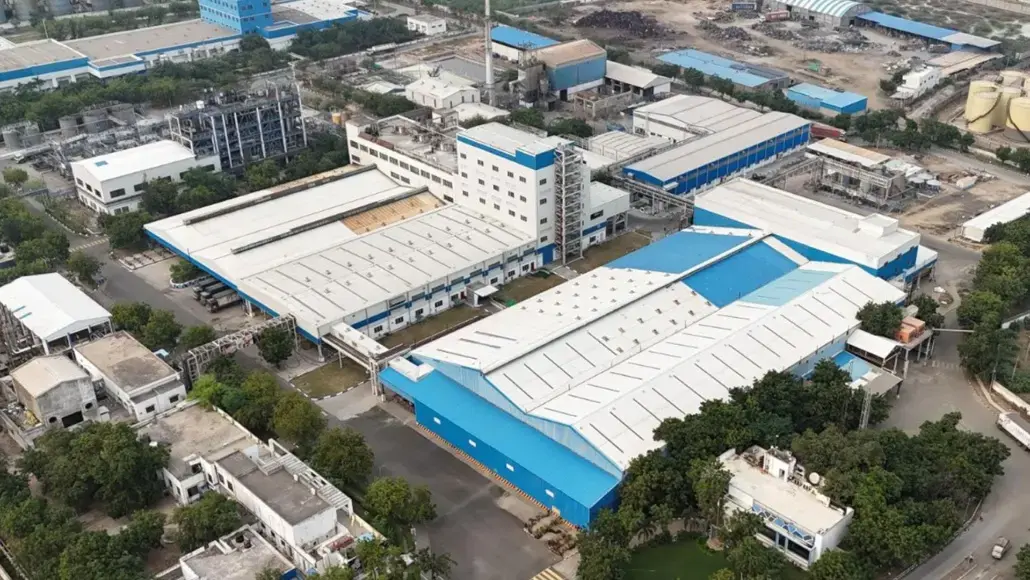

Unilever has gone ahead and collaborated with Accenture in order to speed up usage of AI-led digital twins in global manufacturing network. This will help to enhance product quality and operational effectiveness and make the responsiveness to consumer demand better.
It is well to be noted that this multi-year initiative will include Unilever expanding the application of digital twin technology, such as virtual replicas of factory machinery as well as production lines that employ live operational data to track, forecast, and boost performance. The company intends to build over 40 new digital twins as a part of a worldwide deployment in the forthcoming 18 months.
Unilever is planning to integrate digital twins along with AI-powered analysis and agentic capabilities in order to assist manufacturing teams detect problems sooner, replicate production scenarios more quickly, and make more informed choices. Accenture is supporting the rollout of industrial AI systems that can forecast maintenance requirements, enhance equipment efficiency, and automate some operational adjustments under human supervision.
Interestingly, AI-led digital twins in global manufacturing is already yielding measurable results across multiple manufacturing sites. Apparently, a digital twin for a North Carolina-based deodorant manufacturer has minimized waste by 20% and boosted capacity by 10%. In India, energy-focused digital twins have been used to minimize the thermal energy use in the production of detergents. In Poland, the technology has been employed to enhance the uniformity of mayonnaise and decrease stoppages by almost 20%, while lowering waste by nearly 30%. Identical gains have been made in soap manufacturing in India and liquid home care production in Vietnam.
The move builds on the broader digital transformation agenda set by Unilever and aligns with prior investments within AI innovation, such as its AI Horizon3 Lab located in Toronto.
Unilever is making use of AI and digital twin technology in order to boost production efficiency, help achieve sustainability goals, cut waste, optimize consistency in products, and increase operational flexibility. The move also aligns with the objective of the company to leverage cutting-edge technology for long-term growth and to uphold supply chain dominance when it comes to the consumer product space.