

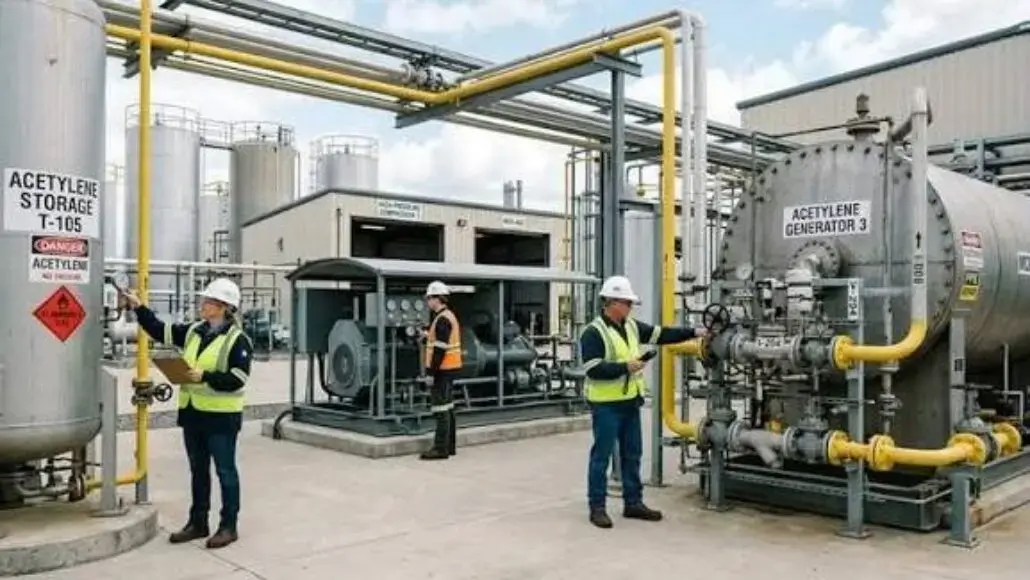

Acetylene is a colourless, highly flammable gas which burns with oxygen at about 3,100°C, the hottest flame of any common fuel gas. This makes it the standard gas for oxy-acetylene welding, cutting, brazing and flame hardening. It is also used in laboratories, glass working and as a feedstock for chemicals such as acetylene black. Most of the acetylene in India is produced by the reaction of calcium carbide with water. Acetylene is supplied as dissolved acetylene in special cylinders containing a porous mass and acetone. The India Acetylene Market was worth USD 408.46 Million in 2025 and is projected to reach USD 523.31 Million by 2034, registering a CAGR of 5.00% from 2025 to 2034. Setting up an Acetylene Gas Manufacturing Plant in India is a profitable opportunity for industrial gas distributors and entrepreneurs as there is a constant demand for fabrication, infrastructure, shipbuilding and repair workshops.
The investment is primarily dependent on generation capacity, number of cylinders in circulation, degree of automation in filling, and whether the plant also supplies bulk or chemical customers. A lot of the investment is not in the plant itself, but in the cylinder fleet. The cost of an Acetylene Gas Manufacturing Plant depends on the capacity and ranges from about INR 2–5 crore for a small dissolved acetylene plant of 15 to 30 cubic meters per hour, INR 8–20 crore for a plant of 50 to 100 cubic meters per hour with a full cylinder fleet, and INR 60–150 crore for a large plant of 500 cubic meters per hour or more supplying chemical users. “Raw materials account for 60-70% of the operating cost, mainly calcium carbide, so profitability is driven by carbide prices and gas yields.” A good plant normally earns a gross margin of 30 to 40% and a net margin of 12 to 18%.
This is a complete guide for the investors who are interested in how to start an Acetylene Gas manufacturing plant in India. It describes a dissolved acetylene plant of capacity about 60 cubic meters per hour, or roughly 300 tonnes of acetylene per year, supplying fabricators, workshops, shipyards and industrial customers by means of cylinders and bundles. It describes small plants and large bulk units. It talks about products and markets, demand outlook, manufacturing process flow, machinery and raw materials, location and infrastructure, detailed cost and financial break up, PESO and other approvals and how a DPR and financial model convert all this into a bankable plan.
The India acetylene market is expected to witness a significant rise, with an estimated value of USD 408.4 million in 2025 and projected to reach USD 646.5 million by 2034, growing at a steady CAGR of 5.08%. The main route of production in India is calcium carbide and water. The project set-up time for setting up a facility is normally 12 to 24 months. The standard plant capacities are in the range of 30 to 100 cubic meters per hour. Indicative total investment for such projects ranges from INR 2 crore to 150 crore depending on the scale and specific needs of the operation.
The picture above is of a mature but steadily growing market that is closely tied to fabrication, construction and engineering activity. Supply is regional as cylinders are heavy and must be returned for refilling. Therefore, good distribution and cylinder management at local plants have a natural advantage. The wide range of investment is a real choice between a small cylinder plant, a mid-sized plant with a large fleet, and a bulk facility for chemical users. The sections below walk through that choice.
What is Acetylene Gas Production?
Acetylene (C2H2) is a hydrocarbon gas given off when calcium carbide reacts with water. Calcium hydroxide (lime sludge) is a by-product. Acetylene is unstable when compressed alone, so is stored in solution in acetone or DMF in steel cylinders containing a porous mass which stabilises the gas at filling pressures. A typical industrial cylinder holds about 6 to 7 cubic meters of gas. Careful process control and safety systems are therefore central to any plant, as the gas must be purified to remove impurities such as phosphine, hydrogen sulphide and ammonia from the carbide and dried before compression.
Commercially, dissolved acetylene is sold in cylinders and cylinder bundles to fabricators, engineering workshops, shipyards, construction contractors, railroad and automobile repair units, glass and jewellery workers and laboratories, usually on cylinder rental or deposit arrangements. An Acetylene Gas Manufacturing Plant can supply these customers directly, through dealers and gas distributors and chemical users requiring bulk gas. Buyers value consistent purity, full and safe cylinders, reliable delivery and quick cylinder exchange.
- Welding & Cutting: Oxy-acetylene welding, cutting and braze welding.
- Heat Treatment: Metal parts flame hardening and heating.
- Laboratories: Atomic absorption and analytical equipment.
- Chemicals: Feedstock for acetylene black and speciality chemicals.
Main Products and Application of Acetylene Gas
The most important commercial decision is the choice of the product range, because this determines purification, cylinder types and customers:
The acetylene market is a wide range of products tailored to specific industrial requirements. DA Cylinders – Dissolving Gas in Acetone are a mainly portable solution for welding and cutting. Cylinder Bundles use manifolded cylinders to deliver high flow for shipyards and fabricators for applications requiring higher volume. Small Cylinders are made with a small light capacity for easy handling so they are ideal for small workshops. High-Purity Gas adds an extra purification step for laboratory applications where low impurity levels are critical. Large volumes are supplied as Bulk Gas to chemical users through pipeline or captive systems. Also, the production process generates Lime Sludge, a salable by-product of calcium hydroxide that is in demand in the construction and effluent treatment plants – ETPs.
What is the Acetylene Gas Manufacturing in India Growth?
Key Growth Drivers in India and Export Markets
Demand is driven by infrastructure, manufacturing, repair activity, and chemical uses –
- Infrastructure and construction – On-site cutting and welding for steel structures, bridges and buildings.
- Manufacturing growth – Acetylene is used for cutting and heating in the engineering, automotive and capital goods sectors.
- Repair and maintenance – It is widely used in workshops, railroads and plants for repair work.
- Shipbuilding and heavy fabrication – Bulk cylinder supply is needed by large fabrication yards.
- Chemical applications – Demand for bulk gas is provided by acetylene black and speciality chemicals.
India Specific Opportunity
The demand for acetylene is driven by certain key segments, each with its own market context and role in acetylene manufacturing. Infrastructure growth drives the metal fabrication industry to choose DA cylinders as the primary choice. The automotive and repair industry, including workshops across the country, depends heavily on small cylinders. Shipbuilding and heavy industry with large fabrication yards require manifolded bundles to meet high flow requirements. High purity gas is needed for laboratories that use analytical instruments. Lastly, the chemicals sector, which manufactures acetylene black and speciality chemicals, relies on bulk gas supply to fuel its large-scale operations.
The best opportunity for new entrants is in the supply of cylinders to fabricators and workshops in poorly served industrial clusters, the provision of bundles for large fabrication yards and reliable supply to dealers. Producers who combine safe operations, efficient cylinder management and prompt delivery will have the best chance of growing.
Process Flow for Manufacturing Acetylene Gas
Understanding the process helps you in planning equipment, layout and where cost and quality decisions are made. Production comprises receipt and storage of carbide, carbide feeding, gas generation, cooling and washing, purification, low-pressure drying, compression and high-pressure drying to cylinder filling and testing and dispatch. The gas yield depends on the carbide quality and the control of the generator. The purity and the safety depend on the purification, the drying and the safe compression.
Acetylene Gas Production Process Flow Chart
Below is a sequence for a dissolved acetylene plant with calcium carbide: Cylinders are individually prepared, checked and topped up with acetone before filling.
On receipt of carbide the process for the production of acetylene is started. The drums are stored dry until the carbide is fed into the generator. The carbide reacts with water to form acetylene in gas generation. The gas is then cooled and washed to remove impurities and then purified to remove phosphine and hydrogen sulphide. Next step is low pressure drying to remove moisture from the gas. The gas is compressed to the required fill pressure and dried at high pressure to remove the final moisture. Finally, the acetylene is filled into cylinders, weighed, checked for leaks and sent out for use.
Two things determine profitability across this flow. The first is the gas yield, because good quality carbide, the right particle size and well controlled generators will produce more usable gas from the carbide, while poor carbide or losses will directly increase the cost per cubic metre. The second is the efficiency of the cylinders because they are the biggest investment so fast turnaround, accurate filling, low losses and good tracking of the cylinders in the market decide how much petrol each rupee of capital can deliver.
Raw Materials Needed for Acetylene Gas Production
The main inputs are calcium carbide, water, acetone or DMF for cylinders, purifying chemicals, drying agents and cylinder valves and spares. Some domestic calcium carbide is produced in India, but carbide is also imported, mainly from China, so planning revolves around carbide quality and price. The theoretical amount of gas is not obtained from commercial carbide, depending on its purity and lump size.
The operational expenditure (OpEx) for the production of acetylene depends on a number of important raw materials and components. Calcium carbide is the main gas source and represents the largest cost component at 50–58% of OpEx; it is sourced domestically and through imports. Acetone/DMF. The cylinder solvent is acetone or DMF, from domestic vendors, 4–6%. The chemicals used in gas purification are 2-3% for purifying purposes and are also domestically produced. 1-2% in local supply is contributed by water and drying agents necessary for the reaction and drying. Lastly, 2–3% of the cylinders are valves and spares required for their maintenance; these are sourced from domestic suppliers.
Calcium carbide is the largest and most volatile cost and its price is linked to power costs at carbide plants and import prices. The purchase of carbide from reliable suppliers, testing the gas yield of each lot, storage of carbide under dry and sealed conditions, and maintenance of safety stocks help to manage cost, quality, and supply risk.
Location, Land and Infrastructure
The site for an acetylene plant is selected based on the location of industrial clusters that require welding and cutting gases, the availability of calcium carbide supply, safety distances as per PESO, and road connectivity for daily cylinder delivery and return. Other factors include availability of isolated industrial land, reliable power and water, somewhere to dispose of or sell the lime sludge, and proximity to other industrial gas suppliers like oxygen fillers, whose customers often purchase both gases. Cylinders have to be shipped to customers and back, so plants tend to be located within a short distance of their main markets. Clusters with large numbers of fabrication and engineering units have the steadiest demand.
Gujarat has a combination of fabrication and chemical demand, as well as ports to import carbide. Maharashtra, Tamil Nadu and Karnataka have large engineering, automotive and shipbuilding clusters. Jharkhand supplies steel plants and heavy industry, whereas Uttar Pradesh has a large base of fabrication and repair units. The ultimate decision should consider customer clusters, availability of carbide, safety distance, distribution reach and land cost.
Quality, Safety & Environment Systems
Customers want full cylinders, of consistent purity and safe valves. Laboratories want high purity gas, with certificates. A creditable plant requires gas purity and moisture tests, cylinder weighing and leak testing, records of cylinder inspections and periodic hydrostatic testing, and checks of acetone levels and condition of porous mass. Safety is paramount as acetylene is highly flammable and can decompose under pressure so flash back arrestors, flame proof electricals, water deluge systems on filling ramps, pressure and temperature controls and trained operators are essential. Environmental systems include lime sludge handling and sale or disposal in a safe manner and process water treatment. An experienced Acetylene Gas Manufacturing Consultant in India can help you plan the plant capacity, cylinder strategy, safety systems and PESO approvals such that the plant fulfils all regulatory and customer requirements from day one.
Key Risks and Risk Mitigation
The main risks are fire and explosion hazards, carbide price and quality swings, cylinder losses and slow returns, competition from big industrial gas companies and local fillers, regulatory setbacks and slower demand in fabrication and construction. The safety risk is managed by good design, PESO compliance and training; the carbide risk by reliable suppliers and yield testing; the cylinder risk by deposits, tracking and customer agreements; the competition risk by service and reliability; and the demand risk by serving several industries. Promoters usually test these scenarios with an Acetylene Gas Business Plan Consultant in India before deploying capital.
Acetylene Gas Manufacturing License & Approval in India
PESO, which is responsible for the management of calcium carbide, acetylene production and gas cylinders, is the main approval for an acetylene plant, in addition to factory and environmental approvals. Generally, the promoters of Acetylene Gas Manufacturing Plant in India are required to obtain the following licenses:
- Calcium Carbide License – Permission/license for construction under the Calcium Carbide Rules, 1987 for storage in a shed which is part of the acetylene plant.
- Gas Cylinder Filling License – PESO license under Gas Cylinders Rules, 2016 for filling and storage of dissolved acetylene cylinders.
- Cylinder Approvals & Testing – PESO approved cylinders for use, with periodic testing to be conducted at approved facilities.
- Pollution Control Approvals – Consent to Establish and Consent to Operate from State Pollution Control Board that covers lime sludge as well.
- Hazardous Chemicals Compliance – Compliance with hazardous chemicals rules wherein thresholds apply, including an on-site emergency plan.
- Factory License & Fire Safety – Factory license, building approval and Fire NOC.
- Business & Trade Registration – Business registration, GST, Udyam, Import Export Code for importing carbide.
Approval of the PESO construction and licenses are often on the critical path, as the plant cannot be built, store carbide or fill cylinders without them. Preparing site layouts with safety distances and applying to PESO early shortens the time from investment decision to first sales.