

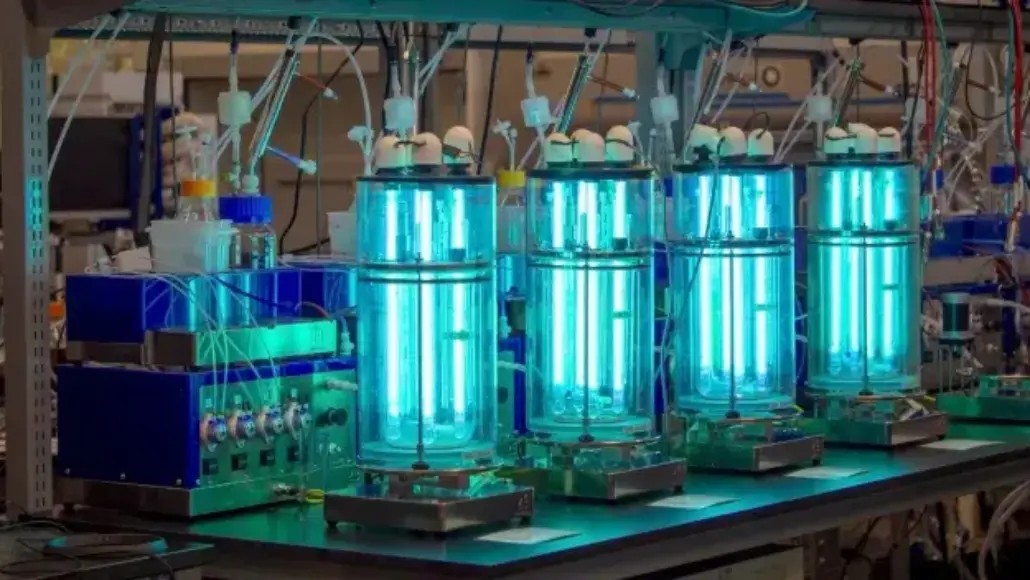

Biosphere has won a US$21mn deal from the US Department of War to develop industrial biomanufacturing systems for local production of critical chemicals and materials. The contract builds on its takeover of NovoNutrients, the gas fermentation specialist, and an earlier Army nutrition project.
The award to create industrial biomanufacturing systems through the Defence Industrial Base Consortium was announced on October 28, 2026. It will assist with engineering and economic evaluations, integrated manufacturing trials, and development, installation, and operation of a 20,000-litre industrial bioreactor to enable larger deployments.
The company, which is based in Oakland, California, is developing reactor technology to reduce the capital cost of building biomanufacturing facilities and the operating expenses associated with manufacturing biologically derived materials. The latest agreement will also promote alternative reactor designs to boost production efficiency with less complex, less costly equipment and infrastructure.
Says the CEO and co-founder of Biosphere, Brian Heligman, “America’s ability to compete with China depends in part on our ability to manufacture the materials that underpin our economy and national defence. Biomanufacturing offers an entirely new approach to this challenge. Instead of relying on complex global supply chains and highly specialized production facilities, we can use biology to manufacture a broad range of critical chemicals from domestically available feedstocks. We aim to make that capability economically competitive at an industrial scale.”
Biosphere’s platform features the latest bioreactor designs, process intensification and patented control and automation systems. The company claims its method replaces traditional steam sterilization with UV sterilization, simplifying manufacturing infrastructure and giving professionals more flexibility in terms of reactor design.
In July 2026, the company bolstered these capabilities with the purchase of NovoNutrients, adding proprietary loop reactor technology and microbial strains as well as gas fermentation skills to its portfolio of products. Terms of finance were not disclosed.
NovoNutrients, formed in 2017 and located in California’s Sunnyvale, developed technology that transforms industrial carbon dioxide and hydrogen into single-cell protein so as to have food and feed. Its reactor work was aimed at facilitating the flow of gaseous feedstocks to biological systems at a commercial level.
Biosphere says that the loop reactor design enhances gas-liquid mass transfer and fluid circulation while lowering energy consumption and upkeep requirements compared to traditional mechanically agitated bioreactors. The technology was verified in laboratory and pilot scale systems and utilised to guide commercial scale design as well as modelling.
At the time of the acquisition, Biosphere stated that the technology would complement its UV sterilization platform to facilitate intensified bioreactor designs for both gas as well as carbohydrate feedstocks. Heligman also cited the existing FEL3 loop reactor pilot plant design of NovoNutrients as a base for additional development under the defence contracts of the company.
The most recent program concerns industrial production capacity, in which Biosphere contends that generalized biomanufacturing infrastructure can be utilized to produce more varied chemicals and materials compared with facilities built around a single product or narrowly defined chemical procedures.
Establishing a strong industrial base is more than just bringing standard manufacturing processes again to the U.S., Heligman said. He added, “It’s about developing fundamentally better ways to manufacture. If we can dramatically reduce the cost and time required to establish new production capacity, we can change the economics of domestic manufacturing and open up entirely new categories of products that are practical to make in America.”
The award corresponds to an Army announcement in May 2026 of a deal with an overall potential value of a maximum of US$9 million throughout 42 months. That project is an alternative application of the biosphere infrastructure, generating protein-rich food in remote and contested settings.
The award, via the US Army Combat Capabilities Development Command Soldier Centre, consists of a baseline task and three choices to create, construct, and demonstrate a field deployable biomanufacturing platform.
The system suggested converting gaseous inputs, minerals and water into protein-rich microbial biomass for shakes and bars, as well as ration ingredients using gas fermentation. The first-generation design is meant for 2,800 calories per person per day for a maximum of 18 personnel. Modelling is planned for larger systems for around 250.
In a previous interview with Protein Production Technology International, Heligman cited routine upkeep, water and media management, energy use, and downstream processing as issues to address for fermenters to be deployed outside of traditional facilities.
One of the most complicated parts of a fermentation is sterile operation. Heligman said that “if we can reduce dependence on traditional steam-in-place infrastructure, we can make reactors simpler, more automated, and more realistic to deploy outside conventional facilities.”
The newly financed 20,000-litre facility was the first plant of industrial scale by Biosphere. The announcement didn’t specify the chemicals to be manufactured or give a schedule for initial production.