

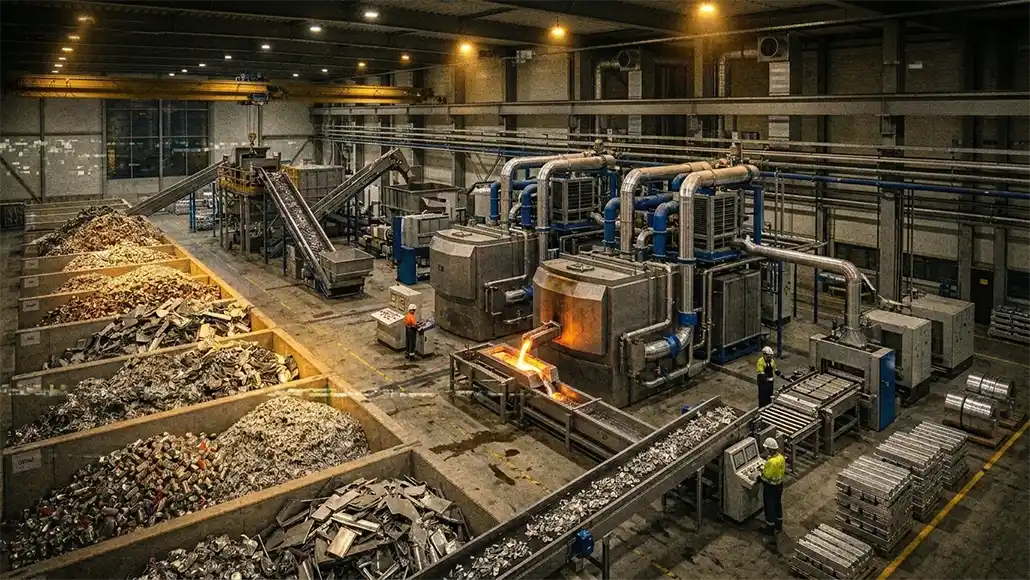

By the end of fiscal year 2026, Novelis Inc. plans to standardize its operations around the world. Ten of its manufacturing plants will have reached the first-level certification under NOS – Novelis Operating System.
The first-level certification under NOS is the first step in a four-level certification system that aims to make the company’s aluminum rolling and recycling operations more consistent. The NOS is based on well-known principles for manufacturing operating systems, but it has been changed to fit the unique challenges of processing aluminum.
This marks a move from decentralized improvement practices to a standardized global model.
The Chief Operating Officer, Novelis Inc., Emilio Braghi, said that “Having world-class operations is fundamental to our business and is essential to our ability to exceed our customers’ expectations. Reaching the first level of NOS certification reflects our commitment to safe and consistent execution, operational reliability, and continuous improvement and innovation.”
Novelis has always focused on making things better, but the NOS creates a single operational framework for all of its factories. This is meant to improve consistency, reliability, and performance throughout all regions.
Plants that have received first-level certification are located in North America, South America, Europe, as well as Asia. Some of these plants are in Berea in the United States, Changzhou in China, Göttingen and several places in Germany, Pindamonhangaba and Santo Andre in Brazil, Sierre in Switzerland, and Yeongju in South Korea.
Novelis plans to get NOS certification for all 29 of its manufacturing plants in the near future, moving each one through the four defined maturity levels. The phased approach should make operations even better, make them more reliable, and at the same time, raise the level of service to customers all over the world.
Novelis is the world’s largest recycler of aluminum and a global leader in flat-rolled aluminum products. The company continues to align its operational discipline with its larger goal of providing consistent, high-performance, and sustainable solutions throughout its value chain.