

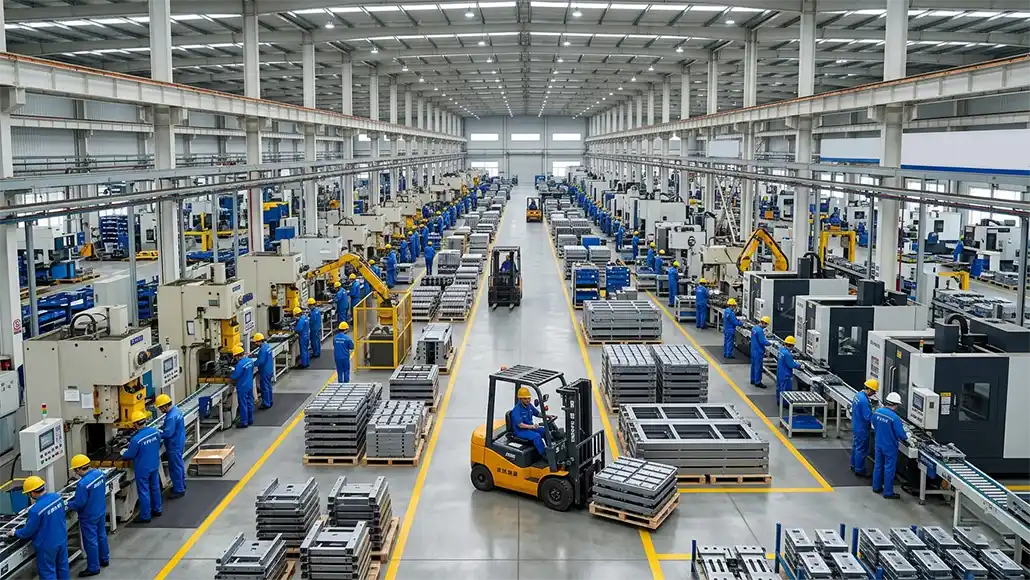

A private-sector survey released recently showed that China’s manufacturing sector grew for the fourth month in a row in March 2026, with output and new orders both increasing. However, rising price pressures in China intensify.
The RatingDog China General Manufacturing Purchasing Managers’ Index – PMI, put together by S&P Global, dropped to 50.8 in March 2026, from 52.1 in February, 2026. This was lower than the analysts’ prediction of 51.6. The 50 mark is the line between growth and decline.
Apparently, an official survey showed that factory activity grew at the fastest rate in a year in March 2026, all thanks to higher demand.
The RatingDog survey found that new orders went up for the tenth month in a row in March 2026. The amount of new export business also went up, but it was slower than in February 2026.
Production went up for the fourth month in a row. Overall, output growth was the fastest in the first quarter of 2026 since the fourth quarter of 2024. Yao Yu, the founder of RatingDog, said that, notably, cost pressures got a lot worse.
Inflation pressures rose quickly during the war in the Middle East. Input costs went up at the fastest rate since March 2022, and output prices went up at the fastest rate in four years as manufacturers passed on the higher costs leading to rising price pressures in China.
An adviser to China’s central bank said that inflation from the Middle East conflict will hurt China’s economy. Policymakers will have to deal with both rising inflation and slowing growth at the same time.
The S&P survey also found that problems with the supply chain got worse in March 2026. For the first time in five months, suppliers’ delivery times got longer, and they were the longest since December 2022. Companies said that delays were caused due to disruptions, fluctuating input prices, and limited supplier capacity.
As companies responded to more orders and backlogs, they hired more people faster.
Outstanding business grew for the second month in a row, and at the fastest rate since last September 2025.
Purchasing activity grew for the third month in a row, but at a slower rate than in February 2026. However, the amount of finished goods in stock went down because some companies filled orders from existing stock.
Manufacturers were still hopeful about production in the coming year because they expected demand to rise, they were investing in capacity, and government policies were helping. But confidence fell from its recent high in February as companies dealt with higher costs and longer lead times.
Economists warned that an input-cost shock to the world’s largest manufacturing base, which employs a huge number of people, could hurt already thin margins. However, they also said that China is better protected from the crisis than most of Asia or Europe.