

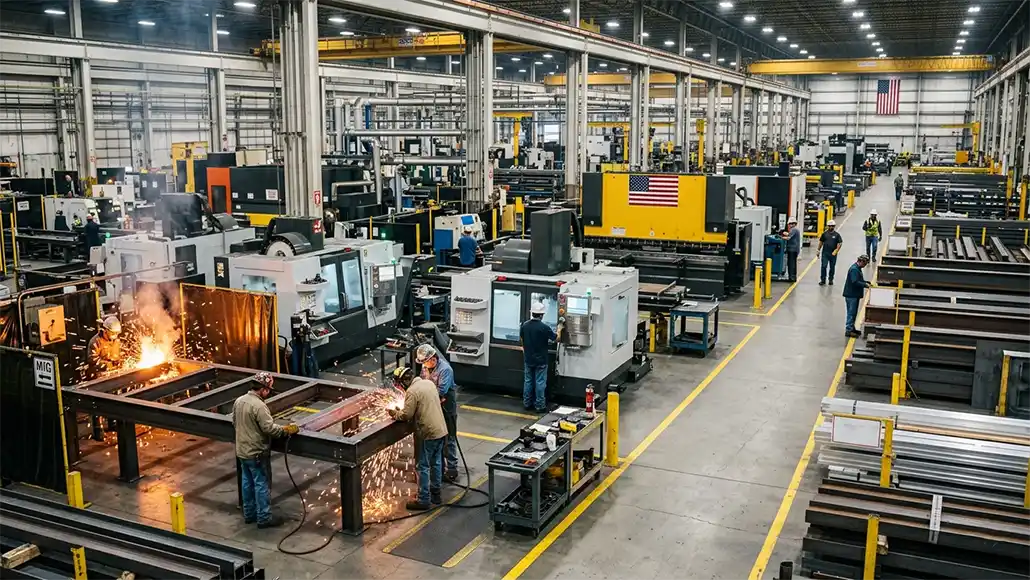

In March 2026, U.S. manufacturing activity picked up, but the prices factories paid for materials rose to their highest level in almost four years, and suppliers took longer to deliver materials because of the war in the Middle East. The Institute for Supply Management said on April 01, 2026, that its manufacturing PMI rose from 52.4 in February 2026 to 52.7 in March 2026, the highest level since August 2022. The PMI was above 50 for the third month in a row, which means that the economy was growing.
Reuters asked economists what they thought the PMI would be, and they said it would stay about the same at 52.5.
The index went up in part because suppliers’ delivery times got longer, which usually happens when the economy is strong and customer demand is high. But in this case, slower deliveries from suppliers probably mean that the supply chains are stuck.
Since the U.S.-Israeli war with Iran began at the end of February 2026, shipping through the Strait of Hormuz has been limited. Global crude prices have gone up over 50% since the war began. There have also been problems with shipments of fertilizers and aluminum. The ISM survey’s index of supplier deliveries went up from 55.1 in February 2026 to 58.9. A reading over 50 means that deliveries are taking longer. In March 2026, manufacturers had to pay more for inputs because their supply chains were muddled. The survey’s prices paid measure went up from 70.5 in February 2026 to 78.3, the highest level since June 2022. The rise was similar to a rise in producer goods prices. Some economists think that the war will raise inflation in 2026, which could stop the Federal Reserve from lowering interest rates this year. In March 2026, the U.S. central bank kept its overnight interest rate between 3.50% and 3.75%. Policymakers expected higher inflation and only one drop in borrowing costs in 2026, according to new projections that came out with the decision.
Even though U.S. manufacturing activity went up last month, tariffs are still making it hard for manufacturing, which makes up 10.1% of the economy. The sector hasn’t yet had the revival that Trump hoped for with his import taxes, which the U.S. Supreme Court struck down. Since then, Trump has said he will go ahead with a global duty. The ISM survey’s new orders sub-index, which looks forward, fell from 55.8 in February 2026 to 53.5 in March 2026. The number of backlog orders also grew more slowly. Factory jobs stayed low. Since January 2025, there have been 100,000 fewer jobs in manufacturing.